 SRMMUN 2020
A Title
Harini Rajesh, reporting from the United Nations General Assembly: Disarmament and Security Council (UNGA: DISEC), brings a human touch into the metallic concept of sanctions, citing Iran as an example.
Sanctions are questionable at best and spine-breaking at worst. A smaller country, however atrocious a crime it commits, does not have a good chance of surviving and riding out a serious sanction. The solution to problems between countries is neither to engage in bloody warfare nor to cripple an already faltering economy with sanctions.
Sanctions have been likened to a “double-edged sword” by many sources. It affects all countries involved in it, though it specifically targets the weaker country. However, for bigger organisations like the European Union (EU), the repercussions are barely noticeable, dealing the target state a big blow at the very least. At full power, a sanction can break a nation.
The Islamic republic of Iran (Iran) has been subjected to many debilitating sanctions in the past 1. A brief respite occurred in July 2015, with Iran agreeing to the terms of the Joint Comprehensive Plan of Action (JCPOA) on various issues such as acquisition and production of nuclear weapons 2. The United States of America (USA) was a part of the agreement but backed out in 2018 citing various reasons such as violation of the deal by Iran and ineffectiveness 3.
The question is, do these sanctions have to affect Iran’s citizens? Iran has been facing economic recessions since the beginning of the establishment of sanctions 4. This does ensure that the country follows the rules set by the JCPOA and makes sure that it reduces the number of nuclear weapon production plants, but it has an oft-overlooked side effect: The condition of people.
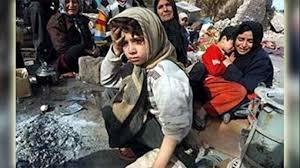
Iran is a developing nation, with its quality of life naturally being lower than it is for a developed nation. However, the effects of sanctions on Iran’s poor are evident. Sanctions have caused economic recessions, which in turn impact the people. The prices of food items have more than doubled, medical procedures are exceedingly expensive due to restrictions on drugs and their development.
In other words, it is not much better than a war. There is no bloodshed and there are no casualties, but there are people dying of starvation. Education, healthcare and jobs disappear along with food, and everyone, from the leaders of the country to the poorest of the poor, is impacted. Like a drug for cancer that ends up killing healthy cells as well as cancer cells, sanctions indiscriminately attack the entire nation. People suffer, children die because of not getting basic needs and the country takes a step backwards instead of forward. The leaders can always resort to making use of the black market or several other loopholes to obtain goods, but this option is not available for the common man.
Development of every nation is one of the United Nations’ most essential duties, along preventing unnecessary wars. However, other countries act with regards to preventing war, sanctions are not the solution. A more targeted, effective solution is the need of the hour. Endangering the lives of more people while the targeted members remain unaffected is completely unreasonable. Not only does it affect the people, but also poses a real environmental threat. On 8 January 2020, two earthquakes struck Iran near a nuclear power plant 5. Sanctions have not been as effective towards shutting down of these plants as they were planned to be. Therefore, sanctions are not the way to reshaping Iran.
(Edited by Harsha Sista)