 SRMMUN 2020
Blood or Paper?
Nikita Rebecca, reporting from the International Law Commission (ILC), details on the futile attempts of the committee, to establish the importance of moral aspect of state responsibility.
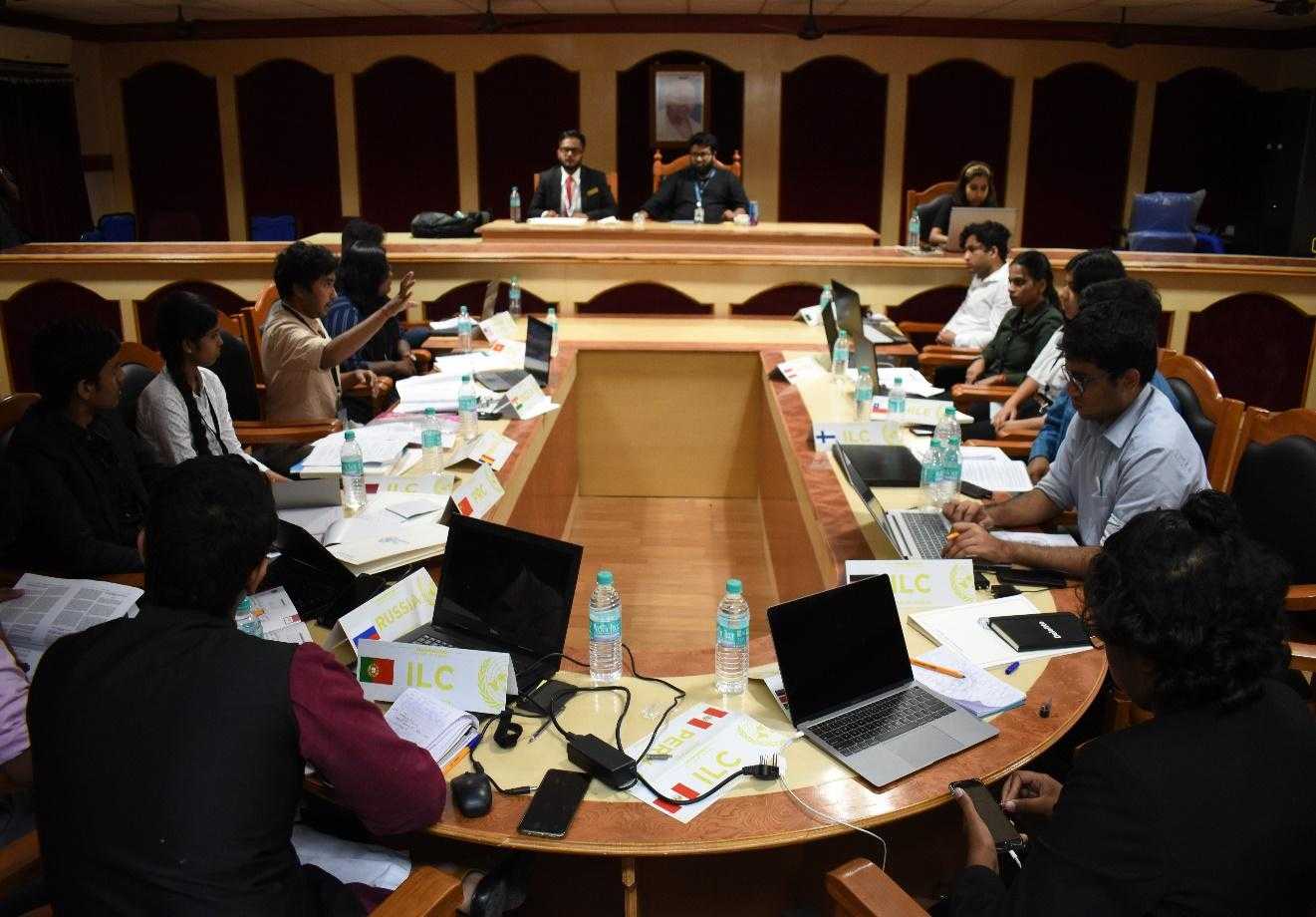
What is considered to be morally right or wrong, is not necessarily in black and white. This is especially true in the case of state responsibility. The delegates present on the committee, were posed with the question of the moral aspect of state responsibility. The Delegate of the Republic of Chile (Chile), set the floor for debate, by defining ‘wrongful acts. The breach of an international obligation by a State, through a series of actions or omissions, is defined in aggregate as wrongful acts when the action or omission occurs which, taken with the other actions or omissions, is sufficient to constitute the wrongful act. The delegate also added that, these serious offences include war crimes and crimes against humanity. This raised serious questions regarding the greys of morality, within the delegates of the committee.
This concern was further elaborated by the Delegate of the People’s Democratic Republic of Algeria (Algeria), who stated that, there is the dire need for a well-defined and internationally accepted legal code. The Delegate also stressed on, the importance of incorporating a moral code that is legally binding as well. This included the responsibility and cooperation of each and every state and individual. The Delegate of Algeria and the Delegate of Chile, pointed out the inconsistencies of legal bodies like International Court of Justice (ICJ) and International Criminal Court (ICC). Both the delegates, condemned the actions of the above legal bodies as being vague and lacking specific insight. All these arguments, steered the debate towards rather murky waters.
The Delegate of the Republic of India (India), raised the question regarding the relevance of the concept of morality when the responsibility of the state is discussed. The Delegate of India also questioned the Delegate of Chile, regarding the logical intricacies regarding the same. Similar questions that ranged from practicality to diplomatic immunity, were raised by the various delegates. However, the Delegate of Chile, strongly reinstated that only strong moral foundations in the legal system can result in the further progress of the International Law Commission (ILC). This led to the wave of emotion in the committee to subside. The Delegate of the Russian Federation (Russia), pointed out the instances in history where humanity failed to impose moral responsibility. The impact of the Holocaust and the Rwandan genocide, were a few examples that brought out the need for the establishment of a proper moral code in the legal system.
The delegates began to build on the debate that ensued. They now faced a deadly choice that would define them for a very long time. Would they choose the blood of a million of innocents to go unnoticed?. Or would they rewrite the laws that caused the very same blood in sheets of white?.