 SRMMUN 2020
The Wolf in Sheep’s Clothing
Suhas R Vaidya, reporting from the United Nations Security Council (UNSC), examines the significance of the People’s Republic of China’s (China) stance in the Middle East.
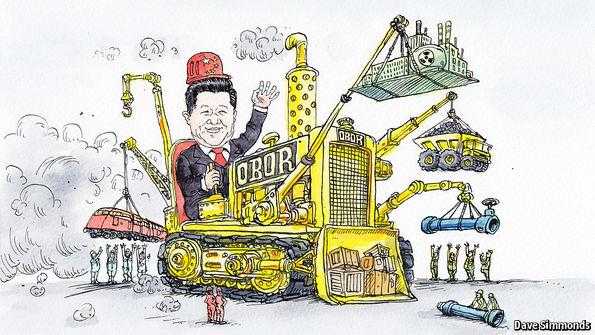
As the Chinese economy expands multi-fold along with the nation’s growing appetite for energy, Beijing has found a wonderful opportunity in realising their empirical targets through the Middle Eastern window. China’s tactful strategy revolves around building relations with individual countries as against the region as a whole. It expects very diverse returns from each of its regional partners, and it seeks to safeguard its regional interests by keeping its bilateral relationships distinct.
Of the various partners in the Middle East, China is the largest trading partner of the Kingdom of Saudi Arabia (Saudi) and the United Arab Emirates (UAE). Numerous mutual avenues for growth have been curated and designed. In substantiation, Chinese construction firms in Saudi have had an unwavering rise in infrastructure undertakings; not counting Saudi’s intent of establishing petrochemical facilities and refineries in China that are calibrated to use Saudi grade crude oil, thus ascertaining a symbiotic bond. China is facilitating as a hedge against Western hostility towards Saudi, especially with regards to oil consumption. Dubai too is a critical stopover for Chinese goods during their transit across the world, thus emerging as a valuable entrepôt for Chinese traders in quest of propinquity to global markets. Beijing’s Belt and Road Initiative (BRI) launched in 2013— a stratagem that seeks to flourish Chinese policies of global economic and infrastructural development—has presented to the UAE a fantastic opening for robust trade relations.
Moving on, Beijing’s profound investments worth billions of dollars in the Arab Republic of Egypt (Egypt), point towards the possibility of an increasing usage of the Suez Canal for Chinese trade to Africa, Europe, and Asia. Extensive Chinese involvement in developing industrial and administrative infrastructure in Egypt, along with numerous visits of Egyptian President Sisi to Beijing strengthens the basis of this perspective.
Next on the check-list is the State of Israel (Israel), which has instituted itself as a one of the pallbearers of energy optimisation and innovation. Israel and China have further boosted their relations with cooperation in terms of advanced technology and counterterrorism between the two governments. In fact, the Chinese venture in Israel rose tenfold between 2016 and 2017, hitting almost $16 billion. Chinese firms are busy affianced in Israeli infrastructure, building tunnels for light rail, developing port facilities in Ashdod and Haifa, and inking agreements to function the ports for 25 years.
Insulated by their common resentment to the United States of America (US), China and the Islamic Republic of Iran have been working together to establish trade links that disbar the US Navy’s access. Economically, Iran is a troubled asset in a region of expensive opportunities, alluring to the mercantilist strain in Chinese foreign policy. Chinese presence in the region, especially after the fallout between President Trump and Iran, brings down military presence in the region, thus serving Beijing’s strategic moves.
The Middle East policy adopted by China is effective mainly because of its calculated and premeditated approach. Instead of offering a regional action plan, it bundles together customised partnerships, tailored to extract maximum benefits. The guise of economic development without social chaos plays wonders in hiding the ulterior motive of driving away Washington’s clutches in the Middle East. This not only flattens the path ahead for the Chinese, but also exposes a critical loophole in tackling Western capitalistic policies.
The success of Beijing’s policies is essentially attributed to the way they are implemented- with sheer focus and sincerity. They have managed to be impactful with their blueprint by outlining their priorities, objectives, and policy instruments; something the United States ought to take inspiration from. (edited by Vaishnavi Deepak)
References: